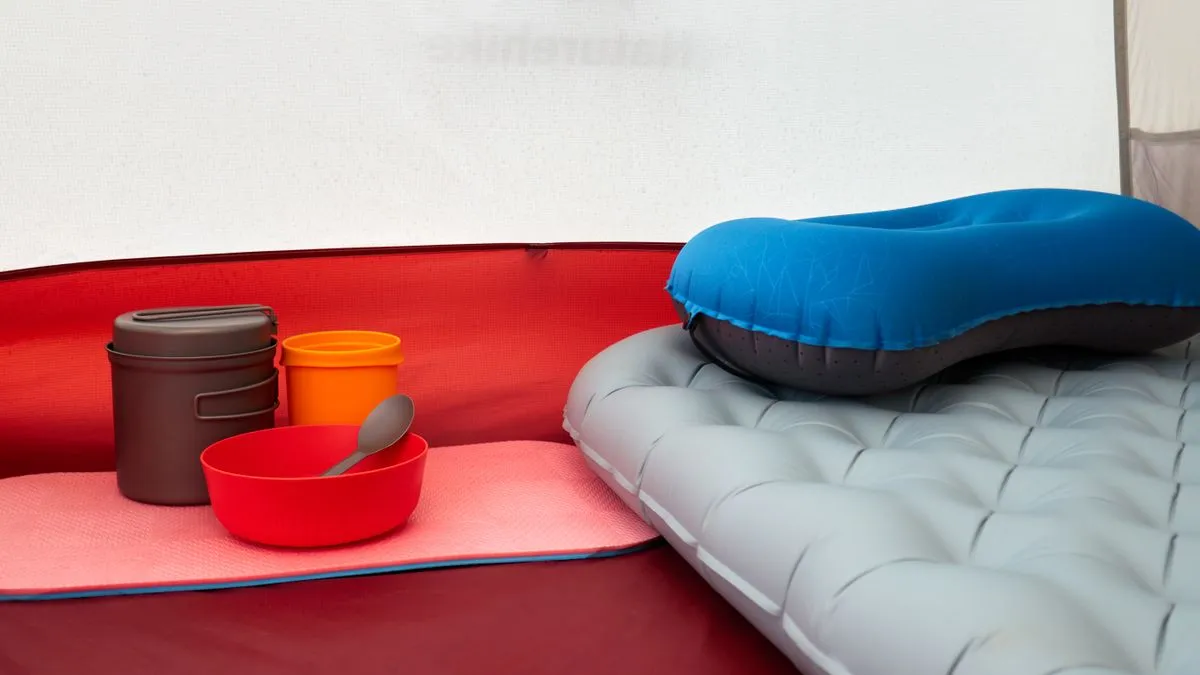
Picture a weekend campsite after the lights go out. You roll onto your side, your hip touches the ground, and the mattress that felt fine for thirty seconds in a store becomes the center of the night. A better buying process begins with how you sleep, the ground conditions and the space inside your tent. Thickness is only one part of that decision.
Compare the options
Separate softness from warmth
REI describes R-value as a measure of a pad’s resistance to heat flow: higher values indicate greater insulation. A thick uninsulated air mattress is therefore not interchangeable with an insulated camping pad. Read the insulation information rather than using visual thickness as a shortcut.
Choose your bag and pad as a system. Ask the manufacturer or retailer about the conditions you expect, especially if you sleep cold. An attractive bargain is less attractive if it forces you to replace another part of your sleep setup before the first trip.
Try your real sleep position
Lie on your side if that is how you sleep. Turn over, bend a knee and place your arms where they naturally rest. Check whether you slide toward an edge and whether the pad makes noise that would annoy your tent companion. A brief seated test tells you little about an entire night.
Measure the tent floor at both ends before ordering wider pads. Two broad rectangular pads may not fit a tapered shelter. Include the pillow arrangement in the trial, because a pillow that slips off the end can make an otherwise comfortable setup frustrating.
Budget for setup and repair
Find out whether a pump bag is included and how the valve works. Imagine inflating the pad when you are tired, then packing it quickly on a damp morning. Large pads can be easy to sleep on but surprisingly slow to roll tightly.
If the pad uses air, learn the manufacturer’s leak-finding and patching procedure before you need it. Take the compatible repair supplies and protect the pad from sharp objects. Avoid assuming that every adhesive or patch works on every fabric coating.
Do not pay twice for the same benefit
A couple who always camps beside the car can often accept extra bulk in exchange for an easier sleep setup. A camper who also backpacks may prefer a smaller pad, accepting that the same item has to satisfy two different jobs. Make that compromise deliberate.
Compare the delivered price with the pump, storage sack and repair items included. Check storage guidance as well as trip packing size; a compressed roll is not necessarily the recommended way to keep a pad between trips. Prioritize sleep comfort over a specification you will never notice.
Questions before you buy
Can I use a household air mattress?
Check the expected ground conditions and the mattress’s insulation information. A comfortable thickness alone does not establish suitability for cool-ground camping.
Is the lightest pad the best value?
Only when carrying weight matters to your trips. For drive-in camping, a lighter pad may cost more while giving you less room or convenience.
Sources & editorial notes
This guide combines original shopping scenarios and editorial reasoning with the published resources below. It does not claim hands-on testing. Product specifications, availability and retailer terms can change; verify the exact listing before purchasing. Sources checked October 4, 2026.
Found something that needs correcting? Contact the editor.